To be blushed and bashful on your big day is a history lesson within itself; a cultural reset that reminds us that women are the chooser’s, and Black Women? The Original Activists for the right to choose for the autonomous act of self-expression.

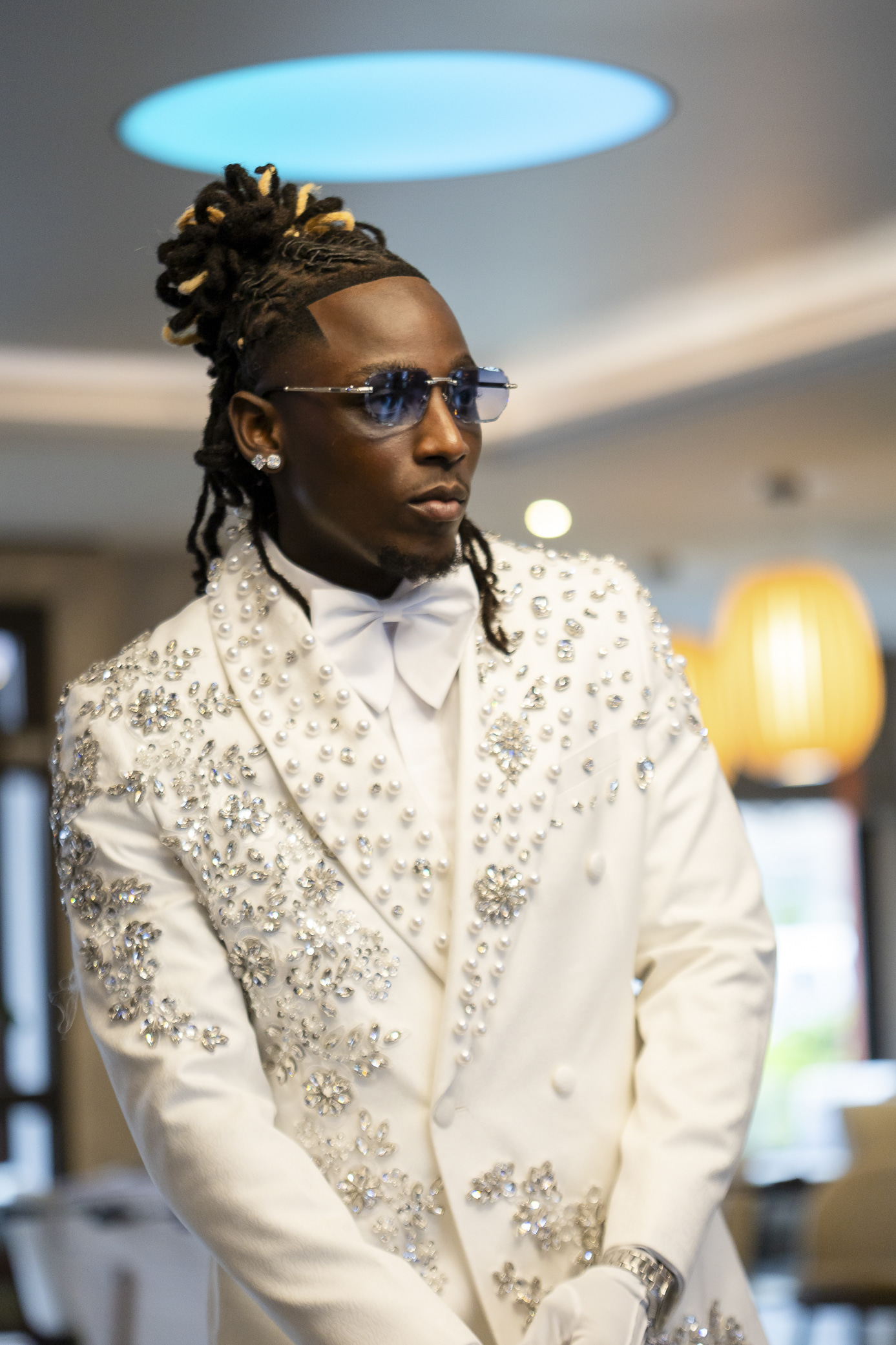
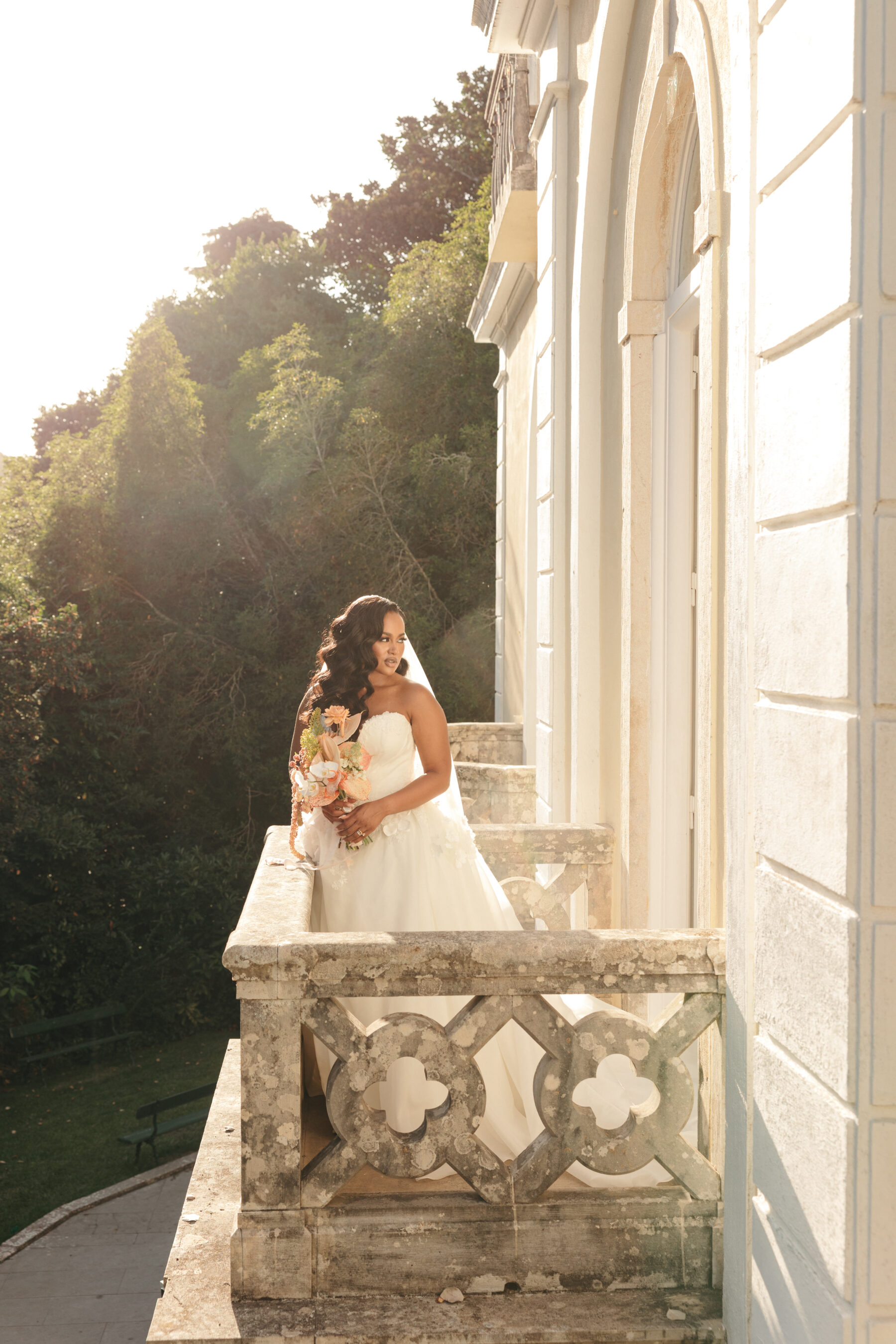
Rapper Monaleo reminded us of this rich history when her wedding to fellow hip hop artists, Stunna 4 Vegas, was streamed this weekend to which both the bride and the groom along with the entire wedding party and subsequent decor and guests donned the color of pink for the big day.
Commonly and historically speaking, it’s become tradition for brides to wear white for their nuptials. In modern history, white has become associated with concepts of “purity” and “angelic nature”, thanks to Art Historians, Artists and Museum Curators who have carried that idea down to the ground of our conscious. Which seems quite the irony when you think of what color means in this country specifically, and the world at large (more on that down below).
But did you know that the color white hasn’t always been the symbolism for all things “angelic” and “pure”?
According to art historians and documentarians, although the imagery we know of today to be representative of the Baby Jesus and Madonna Enthroned in classic, historic art concepts and pieces picture him and her swaddled in white, in the earliest adaptations of them, the pair are actually commonly painted in pink.
Yes, you read that correctly: before “white” was the symbol for purity and Godliness, there was pink.
For example, in the classic piece, “Maestà of Duccio“, painted by Duccio di Buoninsegna from 1308-1311, the infant Jesus is basked in pink cloth, while Mary His Mother is clothed in deep blue.
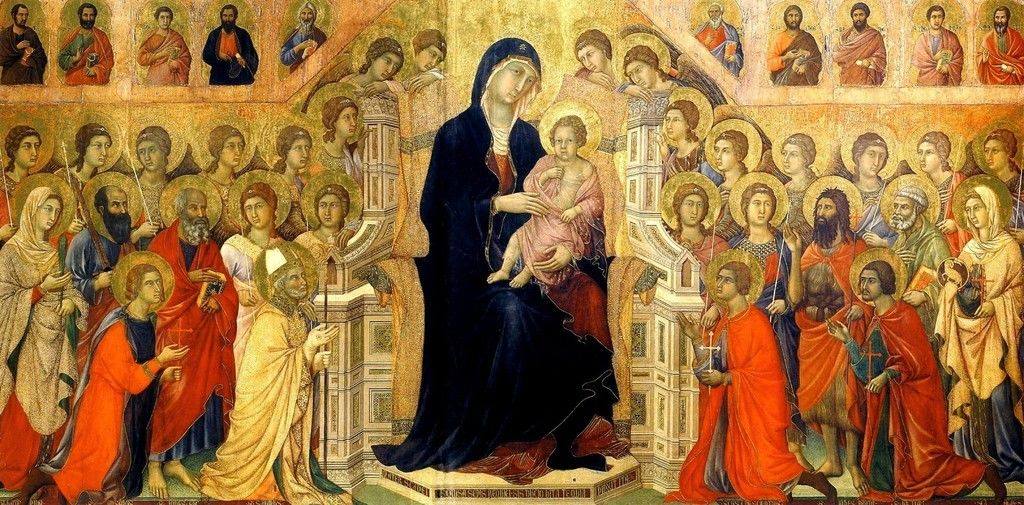
Image by Duccio di Buoninsegna.
And in the high Renaissance painting, Madonna of the Pinks by Raphael, the Christ Child is handing His Mother Mary a pink flower.
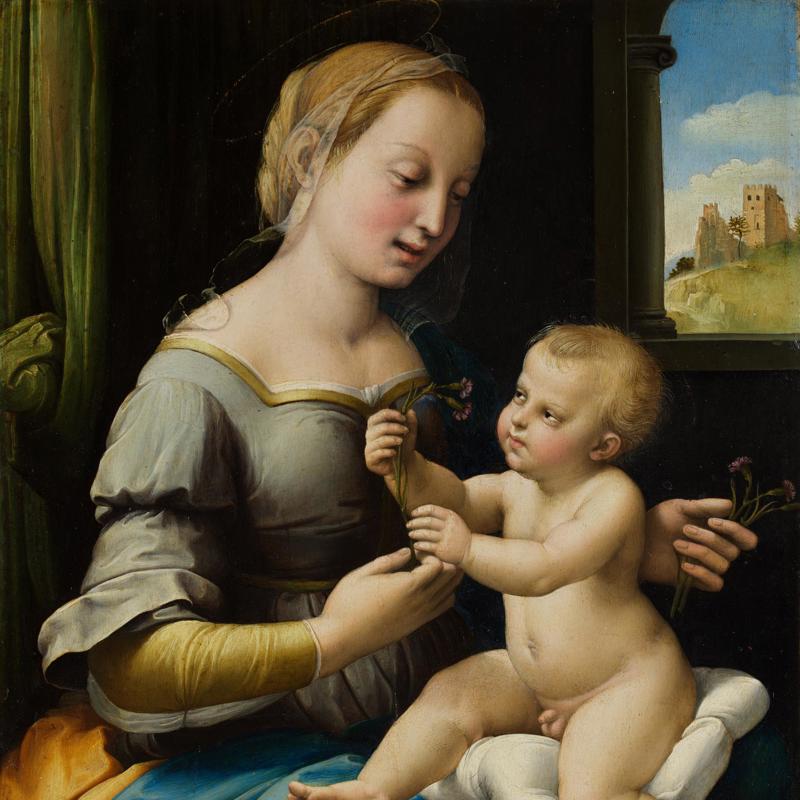
Image by Raphael.
For this era of artistic expression and symbolism, the color pink was associated with all things holy and acceptable, thus becoming a staple amongst the most sacred of things – which led it to becoming a popular color for marriage (cue Julia Roberts in her bridal pink in Steel Magnolias).
But See Also: This is where the math begins to math – when you fast-forward to where both the colors pink and white find themselves today.
Pink now stands as a feminine color that is as easily eroticized, made seductive and materialized as a Black Woman’s body in mass white media while white stands as a visual representative of implication for all things pure, holy and acceptable and pleasing in white Jesus’ sight.
Basically in today’s culture, White is Right but Pink Can Make You Sink.
Sink under the powers that be to conform to a state of submissiveness that demands us dumb down our worth, knowledge, power and spirit to a color we wear – whether it’s our brown skin or our pink clothes – ultimately eliminating our depth and truth to become palatable for the white gaze and flailing, male IQ level.
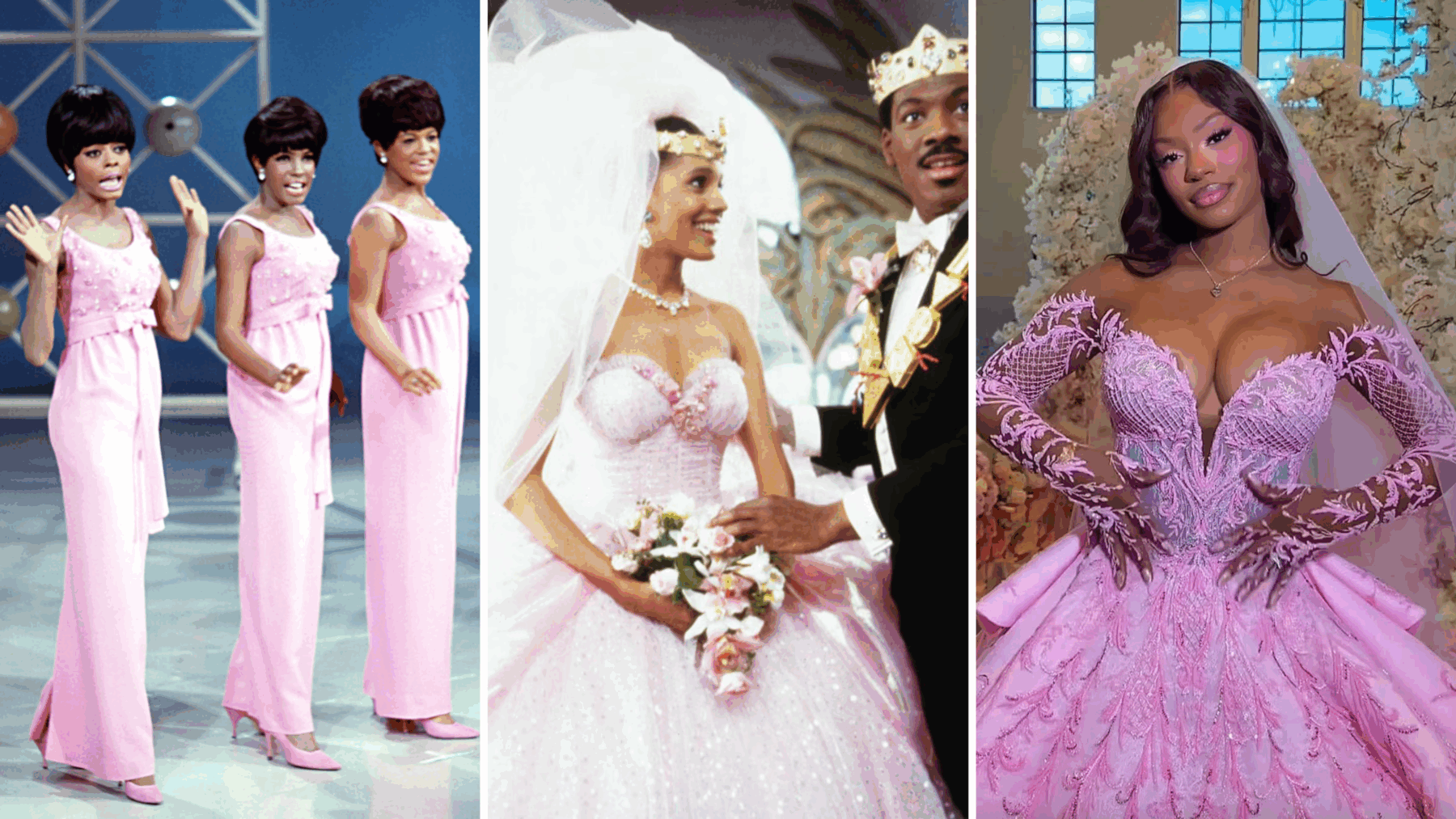
Fast forward to eras of misogyny, global attacks on the right to stylistic self-declaration and we land at pink now becoming hyper-eroticized, and more seductive than pretty. Eventually, women in the 40s and 50s began to reclaim the color, marking it a sign of feminism and femininity rather than masculinity as it was initially painted for.

Images by Getty Images, Ed Clark, Metro-Goldwyn-Mayer/Amazon MGM.
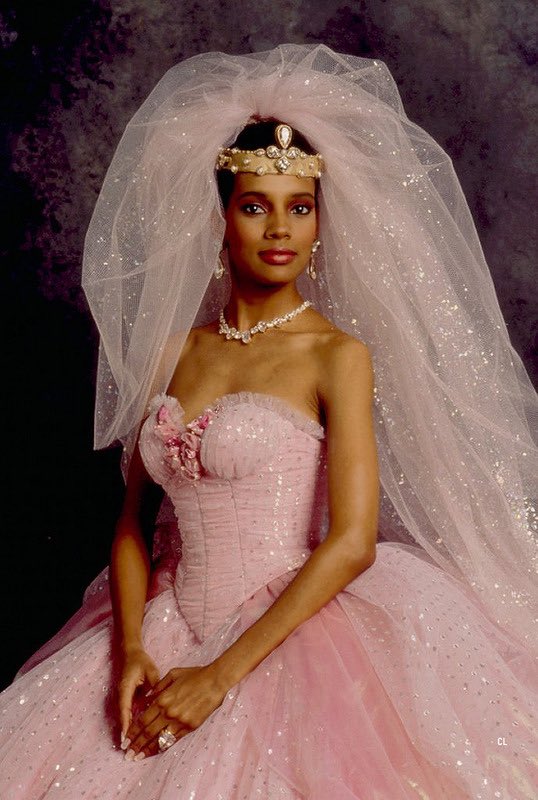
And Black Women? Well, they were unafraid of donning the color with style too, but they brought it back to its original intention instead in 1988, when actress Shari Headley played Lisa McDowell in the Eddie Murphy-led film Coming to America and donned a pink bridal gown for the iconic wedding scene.
Image by Paramount Pictures.
This and for many other reasons is why rapper Monaleo’s dress nearly broke the Internet this weekend. Designed by Alonuko, her dress featured the brand’s legendary illusion mesh, gloved sleeves, a plunging strapless neckline and lace overlay.
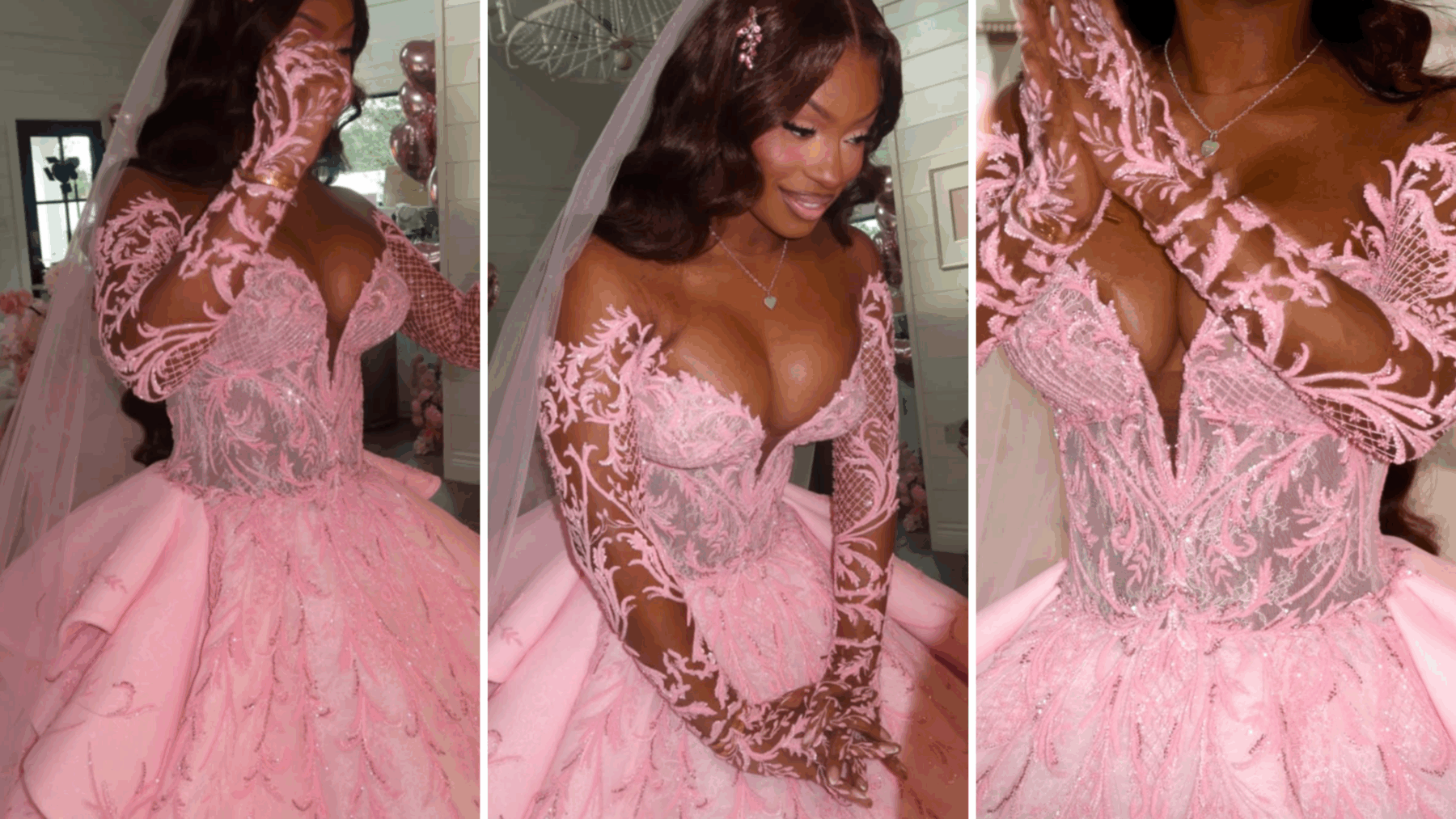
Images by @alonuko_bridal on Instagram.
For Monaleo, her stunning, custom-crafted gown might’ve not been a deliberate protest against the color powers that be but in wearing her dress, she shut down the mouths of Black Women’s Fashion Autonomy Accusers and reminded them that our bodies and love stories are our’s and we will pink them with whatever color we choose.

Because in case anyone needed the reminder: WE are the choosers, and we don’t need a white-centered color scheme to feel chosen.
Written by Fashion & Beauty Writer, Kennedi LéShea.